Imagine you’re in the middle of baking a huge cake for a family party. The recipe calls for a gallon of milk, but your measuring cups only go up to two cups. Panic sets in as you wonder, how many cups are in a gallon? This simple question trips up home cooks and mixers all the time. In this guide, we’ll break down the US liquid measurements step by step. You’ll get clear answers on the gallon to cup conversion and tips to make your kitchen tasks a breeze.
Understanding the US Customary System Hierarchy
Liquid measures in the US follow a neat ladder of units. It starts small and builds up to big volumes like gallons. Knowing this setup helps you convert without guessing.
The Foundation: Fluid Ounces as the Core Unit
The fluid ounce, or fl oz, serves as the base for US liquid measures. One fluid ounce equals about two tablespoons of liquid. It’s the go-to for tiny pours in recipes. Unlike the UK imperial ounce, which ties more to weight, the US version focuses on volume alone. This keeps things consistent for drinks and sauces.
Think of it like building blocks. Fluid ounces stack to form pints, quarts, and gallons. Without grasping this base, bigger conversions get messy. Cooks rely on it for precision in everything from cocktails to soups.
Stepping Up: Quarts and Pints
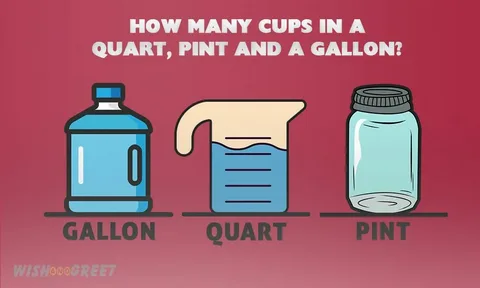
From fluid ounces, we climb to pints and quarts. Two cups make one pint. That pint doubles into a quart with another two. So, simple math shows four cups equal a quart. This chain feels straightforward once you see it.
Grocery stores sell ice cream in pint tubs, perfect for a quick treat. Milk often comes in quart jugs, ideal for cereal bowls. These everyday items make the units feel real. You can picture them when scaling up to a full gallon.
The Apex: Defining the Gallon
A US gallon tops the liquid chain with four quarts. Those four quarts split into eight pints total. Keep going, and you hit 16 cups in one gallon. That’s the key number: 16 cups per gallon. It sounds basic, but it powers large batches in home and pro kitchens.
Gallons appear in big water jugs or paint cans too. They hold steady volumes for tasks beyond food. Once you lock in this top level, the whole system clicks.
The Direct Gallon to Cup Conversion Explained
Converting gallons to cups boils down to multiplying through the units. Start with the basics, and you’ll never forget. Let’s walk through it now.
The Step-by-Step Calculation
One gallon has four quarts. Each quart breaks into two pints, so eight pints overall. Since two cups fill a pint, multiply eight by two. That gives 16 cups in a gallon. Write it out: 4 quarts × 2 pints/quart × 2 cups/pint = 16 cups.
This math proves the fact, not just memorizes it. Print a quick chart for your fridge. List gallons down to ounces on one sheet. It’ll save time during busy meal prep.
Common Kitchen Applications of the 16-Cup Gallon
Big soups or stews often need a gallon of broth base. That’s 16 cups to measure out. Punch for parties uses a gallon of juice, mixed with extras. It serves crowds without running dry.
Standard milk gallons from the store hold exactly 16 cups. Water dispensers follow the same. In catering, pros use these for easy scaling. No more eyeballing volumes that lead to watery messes.
Beyond Cups: Converting Gallons to Other Standard Units
Cups aren’t the only stop on the liquid road. Gallons link to ounces and more. These ties help with fine-tuned recipes.
From Gallons to Fluid Ounces
One gallon packs 128 fluid ounces. Break it down: 16 cups times eight ounces per cup equals 128. Bakers love this for drips of vanilla or oil. It turns a big jug into small doses.
Nutrition labels list servings in ounces too. A gallon of soda? That’s 128 ounces to track. Keep this conversion handy for health goals or diet plans.
Comparing Volume vs. Weight Measures
Fluid ounces measure space liquids take up. Dry ounces weigh ingredients like flour. You can’t swap them; water’s ounce by volume weighs an ounce, but flour’s volume ounce weighs less. This mix-up ruins batters every day.
Culinary experts stress the gap. A baking book might say, “Use volume for liquids, weight for solids.” It avoids soggy cookies or dry cakes. Always check your tools match the type.
Navigating International Differences: Imperial and Metric Systems
US measures differ from places abroad. A quick look at these variations clears confusion. You’ll spot the swaps in global recipes.
The Imperial Gallon Conversion
The imperial gallon, common in the UK and Canada, runs larger than the US one. It equals about 4.8 US gallons? No—wait, one imperial gallon holds roughly 1.2 US gallons, or 19.2 US cups. It breaks into 20 imperial pints, each bigger than US pints.
This extra volume matters for travelers. A UK recipe calling for an imperial gallon? Add 20% more than US cups. Stats show the imperial version at 4.546 liters versus US 3.785. Small gap, big impact on taste.
Introducing the Metric System (Liters)
Switch to metric, and one US gallon nears 3.785 liters. Round it to 3.8 for fast math. A liter beats a quart by a bit, about 1.06 quarts.
Estimate metric from US like this: four quarts per gallon, each quart shy of a liter. So, gallons convert close to four liters. This helps with soda bottles or fuel cans labeled in liters. No calculator needed for rough checks.
Mastering Measurement Accuracy: Tips for Success
Precision turns good cooks into great ones. Simple tools and habits nail liquid amounts. Let’s cover the best ways to measure right.
Tools for Precision: Measuring Cups and Pitchers
Pick glass measuring cups with clear lines for liquids. They let you see levels without tilting. Avoid cheap plastic that warps over time. A one-cup set covers most needs, but grab a gallon pitcher for big jobs.
Read at eye level on a flat counter. Bending down skews the view. This trick ensures your 16 cups in a gallon stay spot on. Clean them right after use to keep marks sharp.
Batch Cooking and Scaling Recipes
Scaling a recipe? If it needs three cups and you use a gallon base, divide 16 by three. That yields about five batches. Adjust spices up to match the jump.
Pro kitchens stock gallon tubs for soups or sauces. They pour exact portions from them. Track inventory this way—no waste. Home users can mimic it with big bowls marked in cups.
- Start with your base liquid in a gallon jug.
- Measure out cups as needed, noting totals.
- Stir well before dividing for even flavor.
Conclusion: Final Takeaways on Gallon Measurement
One US gallon equals four quarts, eight pints, 16 cups, and 128 fluid ounces. These links form the backbone of liquid work. Grasp them, and you’ll handle any pour with ease.
Imperial and metric twists add layers, but US standards rule most US kitchens. Use quality tools and eye-level checks for accuracy. Next time a recipe asks how many cups in a gallon, you’ll know: 16, every time. Bookmark this for your counter—scale up those family favorites without a hitch.

Related Posts