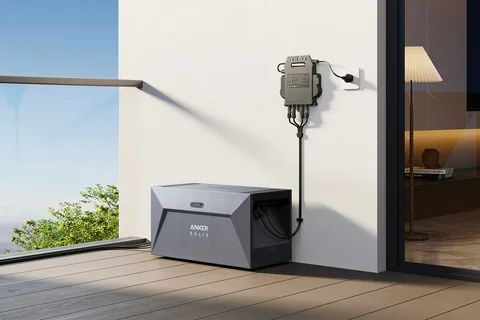
Imagine you’re deep in the woods on a camping trip, or a storm knocks out your home power for hours. You need energy you can count on, without the hassle of bulky generators or short-lived batteries. Anker Solix steps in as the smart fix, offering portable power that keeps up with your life.
This lineup includes powerhouses for on-the-go use and stations for home backup. They pack high energy storage, quick recharges, and batteries that last years. You’ll see why these units beat out older options in reliability and ease.
In this guide, we break down the tech behind Anker Solix, check out the models, and explore real uses. It shows how this brand sets the standard for personal power storage today.
Understanding Anker Solix Core Technology and Innovation
Anker Solix builds on smart designs to make power simple and safe. They focus on batteries that hold up over time. Let’s look at what makes them stand out.
The Shift to LFP Battery Chemistry
Older power stations often use NMC batteries, which wear out fast and can overheat. Anker Solix switches to Lithium Iron Phosphate, or LFP. This choice boosts safety since LFP handles heat better and cuts fire risks.
LFP also means longer life. You get over 3,000 charge cycles before capacity drops to 80%. That’s three times more than many rivals, perfect for daily use or emergencies.
Think of it like upgrading from a cheap flashlight to one that shines bright for years. Users report fewer replacements, saving money in the long run.
HyperCharge Technology: Speed Redefined
Charging slow drains the fun from portable power. Anker’s HyperCharge fixes that with fast input from walls or solar. It reaches 80% in under an hour for most models.
Take the Solix C1000. From a standard outlet, it hits full charge in 58 minutes. Compare that to typical stations taking two hours or more. Solar recharges add even more speed on sunny days.
Here’s a quick comparison:
| Model | Wall Charge to 80% | Full Charge Time |
|---|---|---|
| Solix C1000 | 46 minutes | 58 minutes |
| Average Competitor | 90 minutes | 120 minutes |
This tech lets you grab power quick, so you’re back to your day without wait.
Advanced Battery Management System (BMS)
Every Anker Solix unit has a built-in BMS that watches over the battery. It tracks temperature, voltage, and current to prevent issues. If things get too hot, it adjusts output right away.
This setup protects your gear and the unit itself. It stops overcharging or deep discharges that shorten life. Safety comes first, especially when powering medical devices or kids’ toys.
Users love how it sends alerts via app if something’s off. That peace of mind makes Anker Solix a top pick for families.
Deep Dive into the Anker Solix Product Lineup
Anker Solix offers options for different needs. From light travel to full home support, they cover it all. We compare key features next.
Portable Power Stations (The Solix C-Series)
The C-Series shines for mobility. Models like C800, C1000, and C1500 vary in size but share strong builds.
- C800: 768Wh capacity, 800W output (1600W surge). Great for short trips with two AC outlets and USB-C at 100W.
- C1000: 1056Wh, 1000W output (2000W surge). Handles more devices, including laptops and fans.
- C1500: 1536Wh, 1500W output (3000W surge). Ideal for bigger loads like mini-fridges.
For example, the C1000 powers a CPAP machine all night on one charge. That’s a game-saver for travelers with sleep apnea. Just plug in and forget the grid.
These stations weigh 20-40 pounds, easy to carry. Ports include multiple USBs for phones and tablets too.
Home Backup Solutions (The Solix X Series/Solar Generators)
For bigger needs, the X Series steps up. These modular systems start with a base unit and add batteries as you go. The X1, for instance, holds 1.6kWh base, expandable to 9.6kWh.
They output steady 1800W continuous, enough for lights and fridge during outages. Third-party tests show they run 24 hours on essentials without drop-off. Reviews from sites like PCMag praise the expandability for custom setups.
Installation is straightforward—no pro needed for basics. Link to your home panel for auto-switch during blackouts. It’s like having a quiet guardian for your house.
Integrating Solar Generation with Anker Solix Panels
Pair Anker Solix with their solar panels for off-grid freedom. The 100W and 200W options fold flat and charge fast via MPPT controllers built into the stations.
Efficiency hits 23% on these panels, better than basic ones. In full sun, a 200W panel recharges the C1000 in 6-8 hours. Cloudy days still give 50-70% of that.
Setup is plug-and-play. Unfold the panel, connect the cable, and watch the app track input. This combo turns sunlight into real power for camping or backups.
Maximizing Portability and Real-World Performance
Portability matters when you’re on the move. Anker Solix balances power with ease of use. We cover the details below.
Weight, Dimensions, and Portability Trade-offs
Larger capacity means more weight, but Anker keeps it manageable. The C800 tips at 22 pounds, fitting in a backpack. The C1500 hits 38 pounds but has sturdy handles for lifting.
Dimensions stay compact: the C1000 is about 14x8x10 inches. That’s smaller than many rivals with less power. Trade-offs? Bigger models cost more but pack extra juice for longer trips.
Grab the handle and go—users say it’s like carrying a heavy cooler, not a hassle.
Quiet Operation: Inverter Noise Levels
Noisy fans ruin the calm of camping or quiet nights. Anker Solix runs under 30dB on light loads, like a whisper. Heavy use bumps it to 45dB, still quieter than a fridge hum.
Thermal management spreads heat even, so fans spin less. Tests show it outperforms older models by 20% in noise control. Enjoy peace while your devices charge.
Practical Power Management: Running High-Draw Appliances
High-draw items like fridges need care. For a Solix C1000, start by checking the surge rating—2000W handles startup spikes.
Steps to run a mini-fridge:
- Plug into an AC outlet on the unit.
- Turn on the fridge away from the station to avoid initial surge.
- Monitor via app; it runs 10-12 hours on full charge.
Power tools? The C1500 surges to 3000W for drills or saws. Always match wattage to avoid overload. This keeps things safe and efficient.
Applications: Where Anker Solix Shines
Anker Solix fits many lifestyles. From adventures to daily prep, it delivers. See how in these spots.
The Overlanding and Van Life Power Solution
Van dwellers need steady juice for lights, fridges, and gadgets. Anker Solix provides that with solar ties. In partial shade, panels still recharge 400-600Wh daily.
One user powered a full van setup—fridge, fans, and chargers—for three days off-grid. The LFP battery holds steady in heat or cold. It’s your road trip essential.
Essential Home Emergency Preparedness
Blackouts hit hard. Calculate needs: a fridge uses 100W/hour, lights 20W, modem 10W. Total 130W for basics.
The X Series covers a 24-hour outage for a family of four. Base unit powers fridge and Wi-Fi while solar tops it off. Stock one now—better safe than sorry.
Professional Job Site and Outdoor Work Power
Contractors far from outlets rely on portable power. Anker Solix charges tool batteries fast via USB-C. Run diagnostics or lights without gas fumes.
On a remote site, the C1500 kept drills going all day. Surge power handles startup, and quiet fans don’t drown out talks. Pros swear by its toughness.
Conclusion: Assessing the Value Proposition of Anker Solix
Anker Solix stands out with LFP batteries for long life, HyperCharge for quick fills, and a full ecosystem for any need. You get reliable power without the usual headaches.
Looking ahead, Anker plans more models with app smarts and bigger solar options. It keeps pushing for better home and travel energy.
Invest in Anker Solix for power that lasts. Grab a model today and power your world your way.

Related Posts