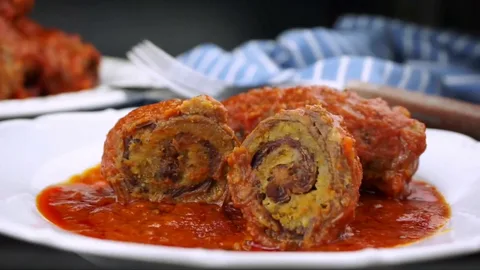
Step into any Italian-American kitchen on a Sunday, and you might be greeted by the rich, savory aroma of a slow-simmering tomato sauce. Often, tucked within that sauce are tender rolls of meat, filled with herbs and cheese. This beloved dish is braciole, a culinary tradition that speaks of family, comfort, and the heart of Italian cooking.
Braciole (pronounced “brah-johl”) is more a method than a single recipe. At its core, it involves thinly sliced meat rolled around a flavorful filling, then browned and slow-cooked in a sauce. While it has become a staple in Italian-American households, its origins trace back to the resourceful and delicious cooking of Southern Italy, particularly regions like Sicily, Calabria, and Naples.
A Dish of Many Faces: Regional Variations
The beauty of braciole lies in its adaptability. Depending on the region, and even the family, the ingredients can change significantly.
- The Meat: While beef, specifically flank steak or top round, is common, you will also find braciole made from pork, veal, or even swordfish in coastal areas. The key is to have a cut that can be pounded thin without falling apart.
- The Filling: This is where the creativity truly shines. A classic Neapolitan filling includes garlic, parsley, raisins, and pine nuts, offering a perfect balance of savory and sweet. In other areas, the filling might feature hard-boiled eggs, prosciutto, or various types of Italian cheese like Pecorino Romano or Provolone.
- The Sauce: Almost universally, braciole is simmered in a rich tomato sauce. The long, slow cooking time allows the meat to become incredibly tender while its flavors meld with and enrich the sauce.
How to Make Classic Beef Braciole at Home
Making braciole is a rewarding process that fills your home with an incredible aroma. This recipe focuses on a classic beef version that is perfect for a Sunday dinner.
Key Ingredients:
- 1.5 to 2 lbs beef flank steak or top round, sliced about ¼-inch thick
- Salt and freshly ground black pepper
- 4 cloves garlic, minced
- ½ cup grated Pecorino Romano cheese
- ½ cup chopped fresh parsley
- ¼ cup plain breadcrumbs
- 2 tablespoons olive oil
- Kitchen twine
- 1 large jar (or about 28 oz) of your favorite tomato sauce or crushed tomatoes
Step-by-Step Instructions:
- Prepare the Meat: Lay the slices of beef on a cutting board. If they are thicker than ¼-inch, cover them with plastic wrap and gently pound them with a meat mallet or rolling pin until they are uniformly thin. Be careful not to tear the meat. Season both sides generously with salt and pepper.
- Create the Filling: In a small bowl, combine the minced garlic, Pecorino Romano cheese, chopped parsley, and breadcrumbs. Mix everything together until it’s well-combined.
- Fill and Roll: Sprinkle the filling mixture evenly over each slice of beef, leaving a small border around the edges. Starting from one of the shorter ends, tightly roll up each slice of beef.
- Secure the Rolls: Use kitchen twine to tie each braciole roll securely. This will prevent it from unravelling during the cooking process. You can tie them once or twice around the middle or create a more elaborate truss.
- Brown the Braciole: Heat the olive oil in a large, heavy-bottomed pot or Dutch oven over medium-high heat. Carefully place the braciole rolls in the pot and brown them on all sides. This searing step is crucial as it builds a deep, savory flavor. Once browned, remove the braciole and set them aside.
- Simmer to Perfection: Pour your tomato sauce into the same pot. Use a wooden spoon to scrape up any browned bits from the bottom—this adds even more flavor. Bring the sauce to a gentle simmer, then return the browned braciole to the pot. Make sure they are mostly submerged in the sauce.
- Slow Cook: Reduce the heat to low, cover the pot, and let the braciole simmer for at least 2 to 3 hours. The longer it cooks, the more tender it will become. Stir occasionally to prevent sticking. The dish is ready when the meat is fork-tender.
Serving and Pairing Suggestions
Before serving, carefully remove the kitchen twine from each braciole. You can serve the rolls whole or slice them into medallions to show off the beautiful spiral of filling inside.
Braciole is traditionally served as a main course, often alongside the pasta that was cooked with its flavorful sauce. A simple bed of rigatoni, ziti, or even creamy polenta makes a perfect companion. For vegetable sides, consider roasted broccoli rabe or a simple green salad with a light vinaigrette.
To complete the meal, pair it with a robust Italian red wine. A Chianti Classico, with its earthy notes and bright acidity, cuts through the richness of the dish beautifully. A Nero d’Avola from Sicily or a Barbera from Piedmont are also excellent choices that complement the hearty flavors of the meat and tomato sauce.

Related Posts