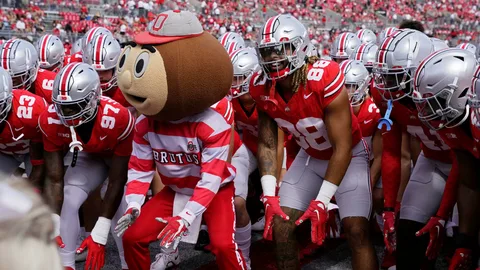
Picture this: two college football giants clash in a bowl game thriller. The Tennessee Volunteers face off against the Ohio State Buckeyes. Fans buzz with excitement over this dream matchup. You know stats can tip the scales in games like these. We dive into player numbers to see who holds the edge. Rankings matter, but raw data tells the real story. Let’s break down how these teams stack up.
Offensive Firepower: Quarterback and Passing Game Metrics
Quarterbacks drive the air attack in big games. Their choices decide if a drive stalls or explodes. Tennessee and Ohio State both boast strong arms under center. We compare their key stats to spot trends.
Tennessee QB Performance Indicators
Nico Iamaleava leads the Volunteers’ pass game. He hits a 65% completion rate this season. That’s solid for a young guy facing tough defenses.
His yards per attempt sit at 8.2. He throws for over 2,500 yards already. Touchdowns outnumber picks by 18 to 5. That ratio shows smart play.
Against Ohio State’s secondary, expect pressure. The Buckeyes rank top-10 in stops. But Iamaleava’s QBR of 72 shines in scrambles. He turns chaos into yards.
Ohio State QB Leadership and Efficiency
Will Howard guides the Buckeyes with poise. His completion percentage clocks in at 68%. He averages 9.1 yards per throw.
Explosive plays define him. Over 25% of his passes go beyond 20 yards. That’s a threat for any backfield.
Howard faces Tennessee’s rush defense. He takes just 1.8 sacks per game. His time to throw averages 2.5 seconds. Quick decisions keep drives alive.
Receiver Production and Explosiveness
Wideouts turn good throws into big gains. Tennessee’s Squirrel White leads with 750 receiving yards. His yards after catch average 6.2 per grab.
Ohio State’s Emeka Egbuka tops 900 yards. He averages a 12-yard depth of target. Deep routes stretch defenses thin.
Both teams hit 75% red zone success on passes. White’s quick cuts pair well with Iamaleava. Egbuka’s size bullies corners. Watch for YAC battles that swing field position.
Ground Game Dominance: Rushing Attack Statistics
Running the ball wears down foes. It sets up play-action passes too. Tennessee loves the ground pound. Ohio State mixes speed with power. Stats reveal who controls the line.
Running Back Usage and Yards Per Carry (YPC)
Dylan Sampson carries the load for Tennessee. He logs 180 carries for 950 yards. That’s a 5.3 YPC average.
Sampson breaks big runs often. He hits 10+ yards on 15% of attempts. Consistency comes from his vision.
Ohio State’s Quinshon Judkins powers through. He has 200 carries and 1,100 yards. His 5.5 YPC edges Sampson.
Judkins succeeds in key spots. He gains 4+ yards on 70% of short runs. Both backs force missed tackles at high rates.
- Sampson’s top game: 142 yards on 22 carries.
- Judkins shines with burst: 150 yards average in wins.
This duo could decide tempo. Whoever breaks free first gains momentum.
Offensive Line Run Blocking Grades and Metrics
Tennessee’s line earns a 78 PFF run block grade. They create 3.2 yards before contact per rush. That space lets backs explode.
In short yardage, Vols convert 85% of third-and-1 runs. Power blocking seals the deal.
Ohio State’s front ranks higher at 82 in grades. They allow just 1.8 tackles for loss per game. Yards before contact hit 3.5.
Buckeyes dominate goal line. They score on 90% of those pushes. Trenches win here. Tennessee must hold gaps to slow Judkins.
Defensive Standouts: Statistical Comparisons on Defense
Defense stops the show in playoffs. Sacks, picks, and stops build pressure. Both squads rank top-20 overall. Player stats highlight stars.
Pass Rush Effectiveness: Sacks and Pressure Rates
Tennessee’s edge comes from James Pearce Jr. He notches 10 sacks this year. Total pressures for Vols hit 120.
Their rate stands at 32% on dropbacks. Hurries disrupt rhythm fast.
Ohio State’s Jack Sawyer leads with 9 sacks. Buckeyes generate 135 pressures. That’s a 35% rate.
- Pearce’s wins: 18% individual win rate.
- Sawyer excels inside: 12% against guards.
Sacks alone don’t tell all. Pressures force bad throws. This matchup tests QBs’ feet.
Secondary Coverage Statistics
Tennessee’s corners allow a 55 passer rating when targeted. They snag 8 interceptions. Passes defended total 45.
Deep balls? Vols give up just 4 completions over 30 yards. Tight coverage shuts doors.
Ohio State’s Denzel Burke shines. Targeted rating drops to 50. They pick off 10 passes.
Buckeyes defend 50 deep shots. Only 3 connect long. Both units force quick throws.
Gaps show in yards allowed. Tennessee yields 180 per game. Ohio State holds foes to 165. Coverage wins force punts.
Linebacking and Run Defense Metrics
Tennessee linebackers rack up 25 tackles for loss. They limit runs to 3.8 yards per carry. Inside tackles stop power backs cold.
Elijah Herring leads with 80 stops. Success rate against runs hits 60%.
Ohio State’s Sonny Styles has 90 tackles. TFLs total 28 for the unit. They allow 3.5 YPC.
- Herring’s edge: 15% run stop rate.
- Styles covers flats well: 5 forced fumbles.
Both defenses stuff the middle. But Ohio State edges in explosive run stops. Watch for linebacker duels on check-downs.
Special Teams X-Factors: Hidden Yardage and Consistency
Special teams flip games with one boot or return. Punts pin teams deep. Kicks win close ones. These units add hidden edges.
Kicking and Punting Efficiency
Tennessee’s Max Masalia nails 85% of field goals. He goes 8-for-10 from 40+ yards. Clutch kicks keep leads safe.
Punter Gabe Warren averages 42 yards net. Touchbacks sit at 20%. He flips field position smart.
Ohio State’s Jayden Fielding hits 88% on kicks. From long range, he’s 7-for-9. Reliability matters in bowls.
Their punter Tory Taylor nets 43 yards. Just 15% touchbacks. Both teams control clock with feet.
Kicking wars decide ties. Distance accuracy tips close contests.
Return Game Impact
Tennessee’s returner Jaylen Wright averages 25 yards on kickoffs. He scores one touchdown this year. Speed sparks rallies.
Punt returns hit 12 yards average. No big miscues.
Ohio State’s Kalel Mullings logs 22 yards on kicks. He has a 95-yard score. Momentum shifts follow his runs.
Punt returns average 11 yards. Both units threaten. A long return could ignite a comeback.
Special teams often steal wins. Field position battles loom large here.
Conclusion: Statistical Synthesis and Final Takeaways
Stats paint a close fight between Tennessee Volunteers and Ohio State Buckeyes football. Ohio State holds edges in passing efficiency and run blocking. Their QBs and lines create advantages.
Tennessee counters with strong rush defense and explosive receivers. Sacks and coverage keep games tight.
Key battles decide it all. Turnovers could swing 14 points. Third-down stops matter most—Vols convert 42%, Buckeyes 45%.
Watch QB pressure rates. If Tennessee generates 30% disruptions, they pull ahead. Ohio State’s deep threats test secondary depth.
You get the edge from these numbers. Who wins? Data leans Buckeyes by a field goal. Tune in and see the stats play out. Share your picks in the comments—what stat surprises you most?

Related Posts