In today’s fast world, people often forget to look after themselves. But what is self care? It means taking steps to keep your body and mind strong. You do this every day through simple choices like eating well or resting. Self-care helps you stay healthy, handle stress, and enjoy life more. This guide explains everything about self-care. We draw from trusted sources like the World Health Organization to give you real facts. Whether you feel great or face health issues, self-care makes a big difference. Let’s dive in and learn how to make it part of your routine.
Understanding What Is Self Care
What is self care? Experts define it as actions you take to protect your health and well-being. The World Health Organization says self-care lets people, families, and groups promote health, stop diseases, keep up wellness, and deal with sickness with or without a doctor’s help. It puts you in charge of your own care. This includes things like choosing good food, moving your body, or managing feelings.
Self-care is not just for sick people. Everyone needs it to stay balanced. The Global Self-Care Federation explains it as using knowledge to handle health on your own, but with pros when needed. It covers healthy habits, avoiding bad ones, using meds right, spotting symptoms, checking your progress, and managing issues. Think of it as teamwork between you and health experts.
In simple terms, self-care is like fueling a car. Without it, you break down. It builds strength for tough times. For example, during busy days, a quick walk can clear your head. Over time, these acts add up to better life quality. Self-care changes with your needs, but the goal stays the same: care for yourself like you would a loved one.
The History of Self-Care
Self-care has deep roots. It started long ago, even in ancient times. Socrates in Greece pushed the idea of caring for yourself and others. Humans have always done basic self-care, like eating or resting, since we began.
In the 1950s, doctors used the term for patients to help manage their health. They wanted people to eat right and exercise to prevent or handle problems. By the 1960s, it grew in the Black Power movement. Activists faced stress and danger. They saw self-care as a way to stay strong. Poet Audre Lorde called it “an act of political warfare.” It helped Black feminists keep their minds sharp and bodies ready for the fight.
The civil rights era made self-care a tool for underserved groups. They used it to build community health when systems failed them. In the 1970s, it spread wider. Psychologist Carl Rogers said people can grow by caring for themselves.
Today, self-care is global. The COVID-19 pandemic highlighted it. People turned to home routines when health services stretched thin. Now, it’s part of wellness talks everywhere. From ancient wisdom to modern apps, self-care evolves but stays vital. Knowing its past shows it’s not a trend—it’s a human need.
Why Self-Care Matters
Self-care boosts your life in many ways. It prevents burnout and builds strength. Studies show people who practice self-care have less stress, better moods, and stronger bodies. For instance, 71% of people say self-care makes them happier, and 67% feel more productive.
It saves money too. By handling small issues yourself, you ease pressure on health systems. Half the world lacks basic care, so self-care fills gaps. In chronic cases, good self-care means fewer hospital stays and longer lives. One stat: Heart failure patients who learn self-care have 12% fewer readmissions.
Self-care supports mental health. It lowers anxiety and depression risks. During crises like pandemics, it keeps you steady. It also helps relationships. When you feel good, you connect better with others. In short, self-care is key for a full, healthy life. It empowers you to thrive, not just survive.
Types of Self-Care
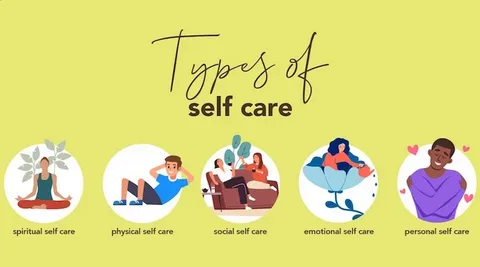
Self-care comes in many forms. Each type targets a part of you. Knowing them helps you balance your routine. Here are eight main types, with tips for each.
Physical Self-Care
This focuses on your body. Move often, eat well, and sleep enough. Walk 30 minutes a day to cut chronic disease risk. Drink water and choose fruits over junk. Hygiene counts too—like brushing teeth to prevent issues.
Mental Self-Care
Keep your mind sharp. Read books, solve puzzles, or learn skills. Journal to process thoughts. Limit screen time to avoid overload. Mental self-care builds focus and reduces worry.
Emotional Self-Care
Handle feelings well. Talk to friends or write emotions. Practice gratitude. If sad, cry or listen to music. This type helps you bounce back from tough days.
Social Self-Care
Build connections. Spend time with loved ones. Join groups or call family. Strong ties fight loneliness. Even introverts need some social time for happiness.
Spiritual Self-Care
Connect to something bigger. Meditate, pray, or walk in nature. It gives purpose. You don’t need religion—yoga or reflection works too.
Professional Self-Care
Care for work life. Set boundaries, take breaks, and seek growth. Avoid burnout by saying no. This keeps you motivated on the job.
Environmental Self-Care
Make your space calm. Clean up, add plants, or declutter. A tidy home eases stress. Spend time outdoors for fresh air.
Financial Self-Care
Manage money wisely. Budget, save, and avoid debt. This reduces worry about bills. Small steps like tracking spends build security.
Mix these types for full care. Start small—pick one and build up.
Self-Care Practices and Examples
Put self-care into action with easy steps. Here are examples for daily life.
- Start your day right: Wake up, stretch, and drink water. Eat a healthy breakfast like oats with fruit.
- Move your body: Walk, run, or dance. Try yoga for flexibility.
- Rest well: Aim for 7-8 hours of sleep. Create a bedtime routine—no screens an hour before.
- Eat mindfully: Choose veggies, proteins, and whole grains. Avoid too much sugar.
- Connect: Call a friend or hug family. Join a club for hobbies.
- Relax: Read, bathe, or meditate. Listen to podcasts on calm topics.
- Set goals: Write daily wins. Celebrate small achievements.
- Say no: Protect time by turning down extra tasks.
- Seek help: Talk to a therapist if needed.
- Enjoy nature: Garden or hike for peace.
These practices fit any schedule. For tech help, explore apps. For more ideas, check aggregated wellness sites like Future Bits. Adapt them to you—self-care is personal.
Benefits of Self-Care
Self-care pays off big. It cuts stress and boosts joy. One survey shows 66% feel less stressed with regular care. It improves sleep, energy, and focus.
For health, it lowers disease risks. Exercise and diet prevent heart issues and diabetes. Mentally, it fights depression—64% report better confidence.
In work, it raises output. Happy people work better. For society, it saves costs—better self-care means fewer doctor visits. During COVID, it kept people safe at home. Overall, self-care leads to longer, fuller lives.
Barriers to Self-Care and How to Overcome Them
Many face hurdles to self-care. Common ones include time shortages, guilt, money issues, and lack of motivation.
Time: Busy schedules block it. Fix by scheduling short slots—like 10-minute walks.
Guilt: Feel selfish? Remember, self-care helps you help others. Start small to build habit.
Money: Costly activities? Choose free ones like reading or nature time.
Motivation: Low energy? Set tiny goals and track wins.
Other barriers: Stigma or work demands. Seek support groups or set boundaries.
Overcome by planning. Use lists:
- Spot your barrier.
- Pick a fix.
- Try it weekly.
- Adjust as needed.
With effort, barriers fade.
Self-Care for Chronic Illness
If you have ongoing health issues, self-care is crucial. It manages symptoms and improves life. Follow plans, take meds, and monitor changes.
Tips:
- Track symptoms: Use apps or journals.
- Eat right: Focus on nutrients for energy.
- Move gently: Try walking or swimming.
- Rest: Balance activity with breaks.
- Seek support: Join groups for tips.
- Mind health: Meditate to ease worry.
For diabetes, check blood sugar daily. In heart issues, watch weight. Self-care cuts hospital trips and boosts survival. Work with doctors, but own your routine.
Self-Care at Different Life Stages
Self-care shifts with age. Tailor it to your phase for best results.
Childhood: Teach basics like handwashing and play. Encourage feelings talk.
Teens: Handle stress with hobbies. Build sleep habits.
Adults: Balance work with breaks. Focus on relationships.
Seniors: Stay active with gentle exercise. Combat loneliness via social ties. Puzzles keep minds sharp.
In pregnancy, rest more. For parents, sneak in me-time. Each stage needs unique care—listen to your body.
Self-Care During Challenging Times
Tough periods like pandemics test us. Self-care keeps you grounded. During COVID, people used home workouts and virtual chats.
Steps:
- Stay connected: Video calls beat isolation.
- Routine: Set daily schedules.
- Breathe deep: Calm anxiety.
- Limit news: Avoid overload.
- Nourish: Eat well, hydrate.
These build resilience. In crises, self-care is your anchor.
Inspirational Quotes on Self-Care
Words inspire action. Here are some:
- “Self-care is how you take your power back.” – Lalah Delia
- “Caring for myself is not self-indulgence, it is self-preservation.” – Audre Lorde
- “You owe yourself the love that you so freely give to other people.” – Unknown
Use them as reminders. Post on walls or phones.
FAQs on What Is Self Care
What is self care exactly? It’s actions to maintain health and handle stress.
How do I start? Pick one small habit, like walking daily.
Is it selfish? No—it helps you support others better.
How often? Daily, even if short.
What if I have no time? Use quick wins, like deep breaths.
Does it help mental health? Yes, it reduces anxiety.
Conclusion
In summary, what is self care? It’s the key to a strong, happy life. From ancient roots to modern needs, it empowers you to manage health, beat barriers, and thrive in any stage. Practice types like physical or emotional care daily for benefits like less stress and better well-being. Remember, small steps lead to big changes. What one self-care act will you try today?
References
- What is self-care? – Global Self-Care Federation
- Self-care – World Health Organization
- Self-care – Wikipedia
Audience Insights: This article targets the general public, including families, individuals with chronic conditions, and busy professionals. It uses simple language for easy reading, focusing on practical tips for all ages and backgrounds to promote health equity.

Related Posts